
Modern aircraft rely on a complex network of in-flight sensors to enhance safe operation across the entire flight envelope.
From pilot controls to braking systems, structural load monitoring and fluid management, these sensors operate continuously in some of the harshest environments encountered in engineering.
Unlike ground-based aircraft testing, in-flight sensing demands absolute reliability. Sensors must perform flawlessly under constant vibration, extreme temperature variation, electromagnetic interference and long-term fatigue loading, often with limited opportunities for inspection or maintenance. In flight-critical systems, even minor measurement drift or intermittent signal loss can have serious consequences.
This is why sensor reliability is a core design requirement for aerospace programs. HITEC Sensors specialises in custom, strain-gauge-based aerospace sensors and transducers engineered specifically for in-flight applications where safety, reliability and long-term stability are non-negotiable.
The Demands of In-Flight Aerospace Environments
In-flight aerospace sensors operate in conditions that push both mechanical and electronic designs to their limits. Throughout a single flight, sensors may experience rapid altitude changes, severe temperature gradients, sustained vibration, aerodynamic loading, and intense electromagnetic noise from onboard systems.
These environmental factors directly influence sensor performance and reliability by increasing risks such as signal drift, material fatigue, thermal expansion effects, and electrical interference. Over time, repeated exposure can degrade accuracy if sensors are not explicitly designed for aerospace use.
For flight-critical systems, sensor reliability is a key requirement. This is particularly true in applications involving flight controls, braking systems, and structural load monitoring, where accurate data under all operating conditions is essential for aircraft safety, controllability, and certification.
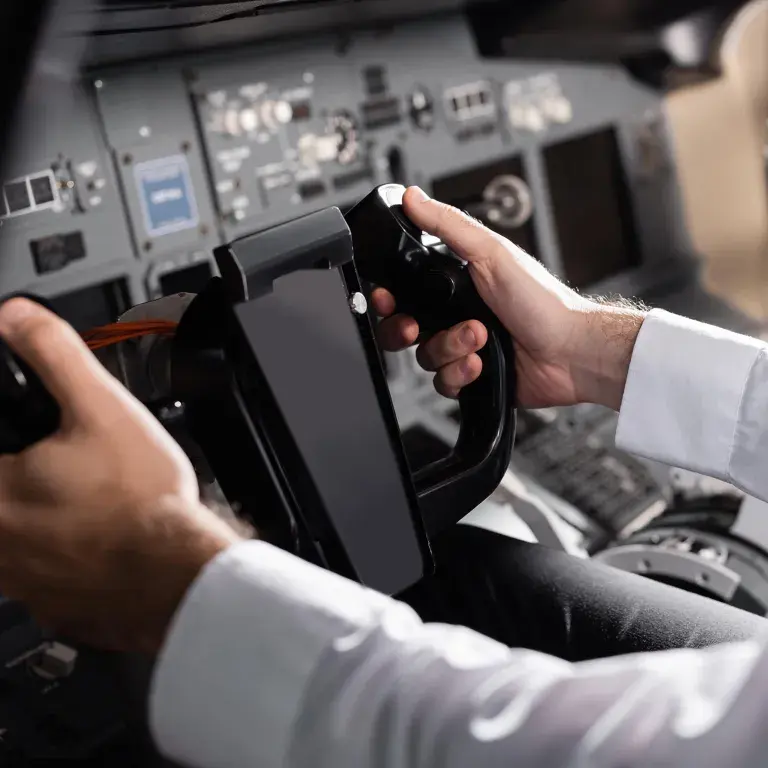
Flight control systems are among the most safety-critical subsystems on any aircraft. They rely heavily on precise force measurement to translate pilot intent into controlled aircraft response.
Single-axis and dual-axis force sensors are commonly used in flight control applications to measure pilot input forces and actuator loads.
Typical in-flight uses include:
- Control columns and yokes
- Active control sidesticks
- Rudder pedal assemblies
- Trim and secondary control mechanisms
In these applications, force sensors must provide highly repeatable measurements despite vibration, rapid load reversals, and long service life. Any drift in output can alter control feel, affect flight envelope protection systems, or compromise redundancy logic.
Dual-axis force sensors are particularly valuable where pilot inputs or control loads occur in more than one direction. By measuring forces along multiple axes within a single compact sensor, they reduce installation complexity while providing a more complete picture of real in-flight loading.
HITEC designs custom single-axis and dual-axis aerospace sensors optimised for flight control integration, offering high accuracy, mechanical robustness, and stable performance across the full range of operating conditions.
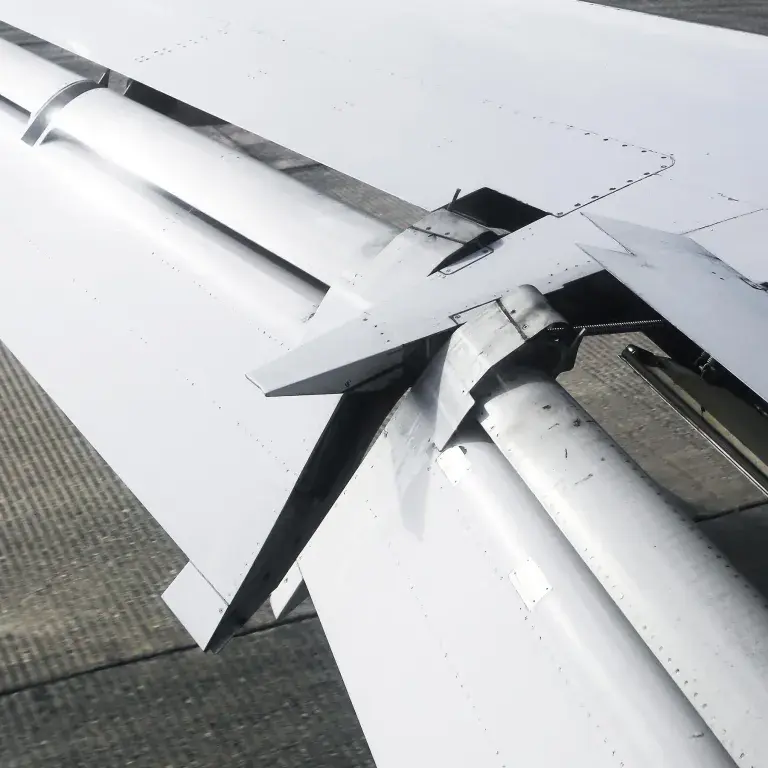
To eliminate single points of failure, primary flight control systems often employ quad-redundant sensor architectures. In these systems, multiple independent sensors measure the same force or load, allowing flight control computers to compare signals and isolate faulty data through voting logic.
Quad redundancy is especially common in:
- Active control sidesticks
- Fly-by-wire flight control systems
- Critical actuator load monitoring
For redundancy to be effective, each sensor must be electrically and mechanically segregated while still fitting within tight packaging constraints. Well-designed sensors protect redundancy by preventing correlated failure modes and protect dynamics by minimising size and weight.
HITEC supports quad-redundant architectures through custom sensor designs that prioritise compact form factors, damage tolerance, and consistent performance across multiple channels. This approach enables aerospace engineers to meet stringent safety requirements without compromising integration or aircraft mass budgets.
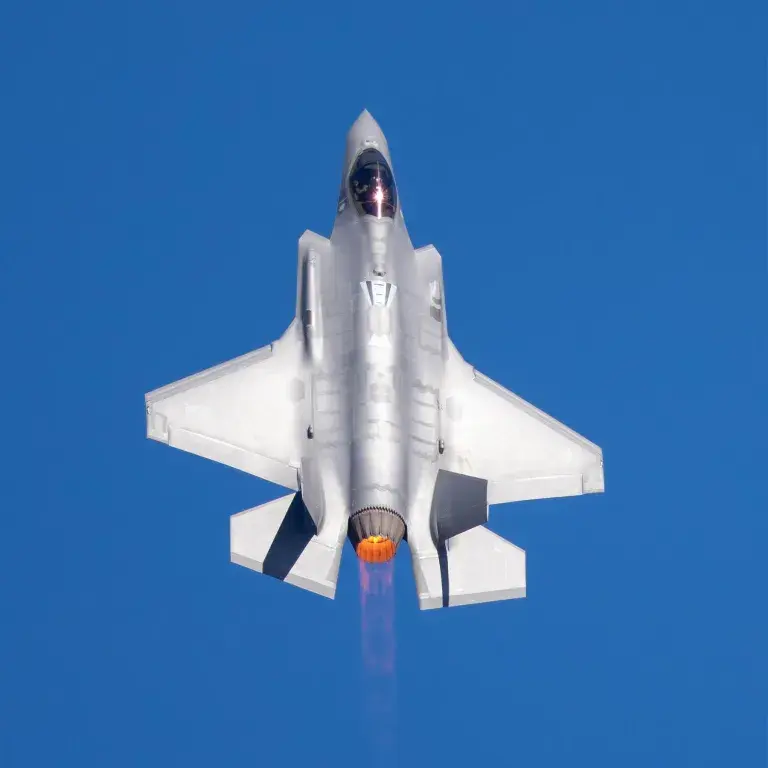
In addition to secondary sensing paths, many aircraft incorporate secondary load path sensors to provide an additional layer of safety and insight. These sensors monitor backup structural load paths and detect unexpected load redistribution during flight.
Secondary load path sensors are particularly valuable for monitoring:
- Structural integrity under pressurisation and manoeuvre conditions
- Load redistribution caused by component degradation or damage
- Structural response during abnormal or emergency scenarios
By providing independent verification of structural loads, these sensors support real-time monitoring and post-flight analysis, enhancing confidence in airframe integrity.
In-flight measurements from secondary load path sensors also complement traditional airframe testing by capturing real operational data that may not be fully replicated during ground-based structural testing programs.
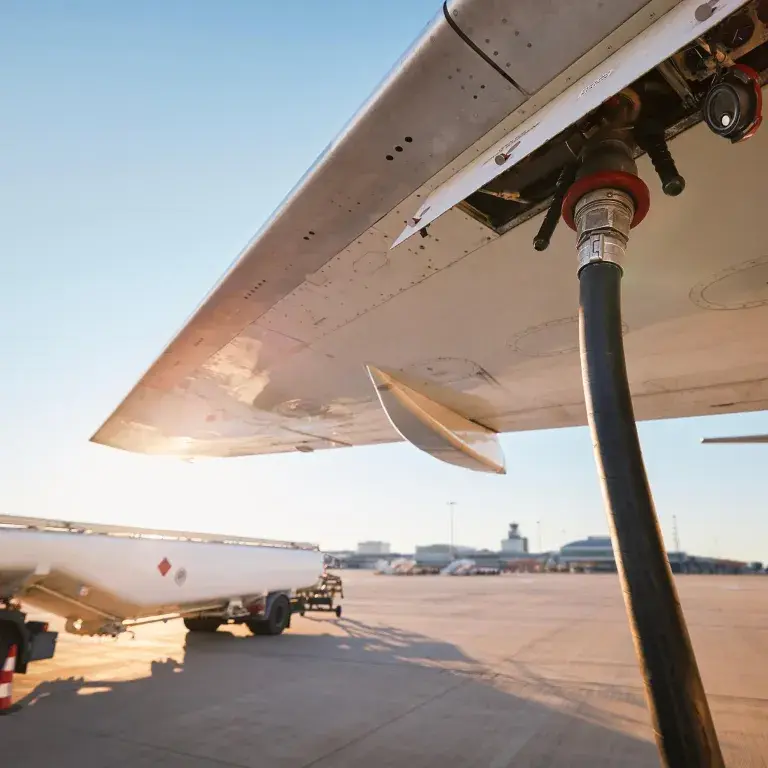
Beyond structural and control systems, reliable in-flight sensing is also essential for aircraft fluid management. Continuous level sensors are used to monitor waste tanks, water systems, and other onboard fluid reservoirs throughout all phases of flight.
These sensors must function accurately despite challenging conditions such as:
- Turbulence and landing shock loads
- Changes in aircraft attitude
- Vibration and temperature variation
- Pressure changes with altitude
Inaccurate level measurement can lead to operational issues, maintenance challenges and safety concerns. Aerospace-grade continuous level sensors are therefore designed with stable output characteristics and robust construction to ensure dependable performance over long service intervals.
HITEC’s custom sensing solutions allow continuous level sensors to be tailored to specific tank geometries, installation constraints, and environmental requirements, supporting reliable in-flight monitoring without compromising aircraft design.
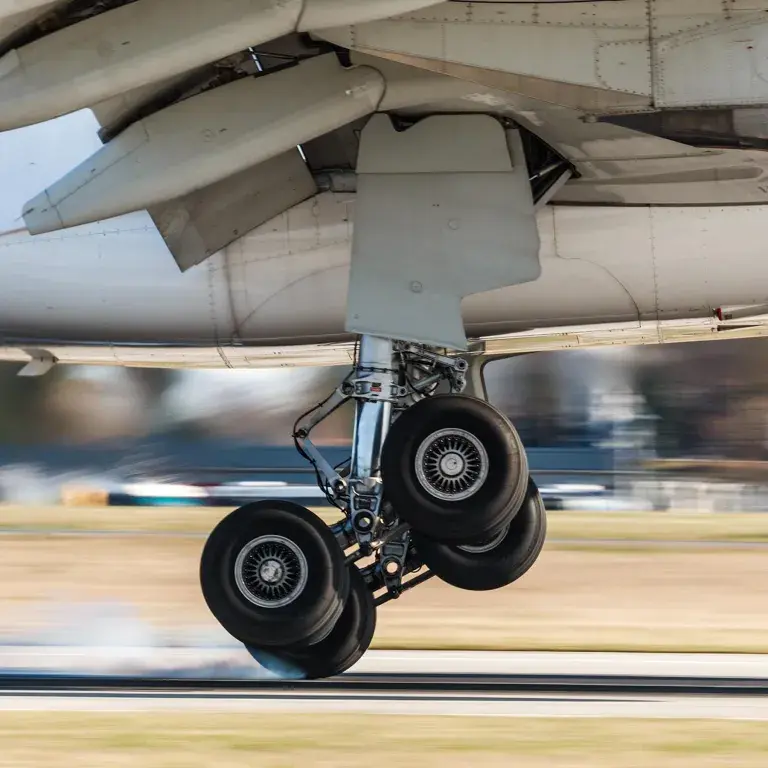
Electric brake systems play a critical role during landing, taxiing, and rejected take-off events. Sensors used in these systems must measure forces or torques accurately while enduring high shock loads, elevated temperatures, and repeated duty cycles.
Electric brake sensors support applications such as:
- Brake-by-wire systems
- Brake force and pressure monitoring
- Load verification during high-energy stops
Because braking systems are subject to intense mechanical and thermal stresses, sensor reliability is paramount. Aerospace torque sensors and force sensors used in braking applications must maintain calibration stability and mechanical integrity over the operational life of the brake.
HITEC’s experience in custom aerospace sensor design enables the development of brake sensors that meet these demanding requirements while integrating seamlessly with modern electric braking architectures.
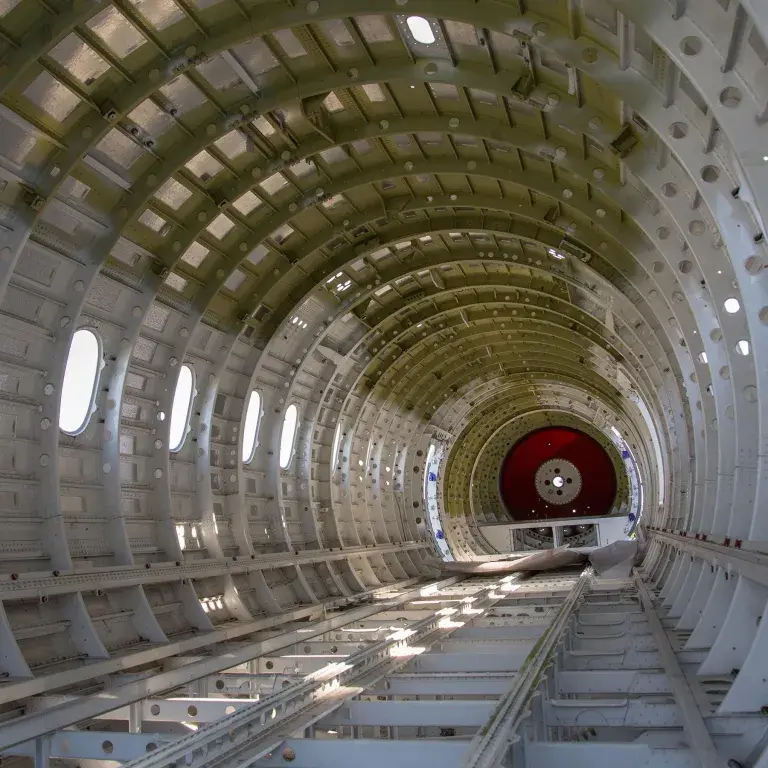
Many in-flight measurement challenges cannot be addressed using standard off-the-shelf sensors. Space constraints, complex load paths, and unique installation requirements often demand fully custom solutions.
HITEC specialises in the design and manufacture of custom load cells and miniature aerospace sensors for in-flight use. These sensors are engineered to be embedded directly within aircraft structures or installed in confined locations where conventional sensors cannot operate.
Typical applications include:
- Monitoring fuselage loads and fuselage skin loads during flight
- Measuring structural loads of fuselage sections under pressurisation
- Localised load measurement in wings and empennage structures
- Structural integrity monitoring during flight envelope expansion
By tailoring sensor geometry, capacity, and mounting interfaces to the application, HITEC enables accurate in-flight load measurement without compromising structural performance or aircraft weight.
These sensors also support in-flight validation of airframe behaviour, complementing traditional fuselage structural testing, wing structural testing, and empennage testing performed during aircraft development.

While ground-based aircraft structural testing remains essential for certification, in-flight sensors provide unique insight into real-world operational behaviour. Data collected during flight enhances understanding of:
- Aircraft fuselage loads under actual pressurisation cycles
- Wing testing results validated through in-flight bending and gust loads
- Airframe testing assumptions verified in service
In-flight measurements allow engineers to correlate test results with operational conditions, refine fatigue life predictions, and improve future aircraft designs. Reliable aerospace sensors are the foundation of this feedback loop, ensuring that collected data is accurate and remains meaningful over time.
Subscribe for Insights
Industry insights, trends, events and unmissable content straight to your inbox
Sign up to our newsletter to get insider access to stay up to date with all things custom strain gauge sensing
Designing Aerospace Sensors for Long-Term In-Flight Reliability
Sensor reliability does not just happen. It is the result of deliberate engineering decisions made from the earliest stages of design.
Key principles applied to in-flight aerospace sensor design include:

Strain-gauge-based measurement for stability and accuracy

Fatigue-resistant mechanical designs to withstand repeated loading

Temperature compensation to maintain accuracy in all environments

Resistance to vibration, shock, and electromagnetic interference

Compact form factors to support integration into aircraft structures
HITEC applies these principles to every custom aerospace sensor, ensuring long-term performance in demanding in-flight environments.
Enabling Flight-Critical SafetyThrough Reliable In-Flight Sensing
In-flight aerospace sensors play a vital role in modern aircraft, supporting flight controls, braking systems, fluid management, and structural integrity monitoring. These applications demand exceptional reliability, redundancy, and long-term stability under extreme operating conditions.
From single-axis and dual-axis force sensors in flight controls to quad-redundant architectures, secondary load path monitoring, electric brake sensors, and custom miniature load cells, HITEC Sensors delivers aerospace sensing solutions designed specifically for flight-critical safety.
By combining custom engineering expertise with deep aerospace experience, HITEC enables accurate, reliable in-flight measurement that supports safer aircraft, improved performance, and confident certification.