
Industrial assembly tools are operating at higher torque levels, faster cycle times and tighter tolerances than ever before. Automated fastening systems must deliver consistent clamp load across thousands or millions of cycles while operating in environments where vibration, shock and contamination are unavoidable.
At the same time, tool designs continue to shrink. Integration space is limited, yet system performance expectations continue to increase.
In these conditions, force and torque sensing becomes a critical component of assembly tool reliability. Measurement accuracy directly affects joint integrity, product quality and production uptime.
Custom Sensors for Assembly Tools
When sensing fails, the consequences are immediate. Fasteners may be under-torqued, risking joint failure in service. Over-torquing can damage threads, deform components or introduce residual stresses that reduce product lifespan. In high-volume automated assembly, even small measurement errors can propagate into significant scrap rates and warranty exposure.
Reliable force and torque measurement therefore cannot be treated as an add-on. It must be engineered directly into the tool architecture.
HITEC Sensors specialises in designing precision strain gauge-based force and torque transducers engineered for high-load industrial environments, enabling assembly tool manufacturers to embed accurate measurement directly within their tooling platforms.
Through compact transducerization, ruggedised sensor design and multi-channel redundancy, HITEC helps OEMs build assembly systems capable of delivering reliable fastening performance over millions of cycles.
Engineering Challenges of Modern Assembly Tools
Manufacturers of industrial assembly tools face several competing design constraints.
Tools must deliver higher torque output while remaining compact and lightweight. Sensors must integrate without affecting stiffness or tool dynamics. At the same time, the measurement system must remain stable under harsh operating conditions.
These competing requirements create a set of common engineering challenges.
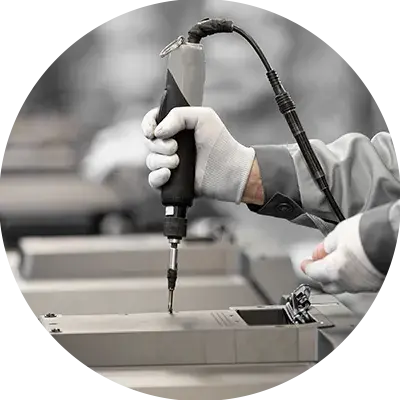
Limited Installation Space in High-Torque Tools
Assembly tools are becoming more compact as production cells demand smaller robotic wrists, lighter handheld tools and tighter installation envelopes.
Within these constraints, engineers must still integrate torque and force feedback capable of maintaining precise fastening control.
Adding traditional measurement components can introduce several problems:
- Increased stack height
- Reduced structural stiffness
- Alignment complexity
- Additional mass affecting dynamic response
HITEC addresses these constraints through transducerized sensor designs, embedding strain gauge measurement directly into load bearing tool components. This approach preserves the mechanical envelope of the tool while delivering accurate torque and force data.
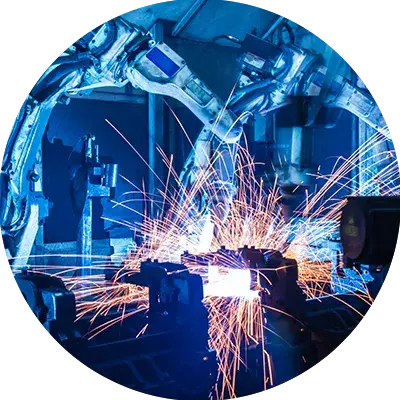
Harsh Conditions in Production Environments
Assembly tools rarely operate in controlled environments. Instead, they are subjected to continuous mechanical and environmental stress:
- Repetitive high-energy impacts
- Continuous vibration from motors and gear systems
- Temperature variation across production shifts
- Dust, oil and metal debris exposure
Sensors not designed for these conditions quickly experience fatigue degradation, drift or outright failure.
HITEC sensors are engineered specifically for harsh environments. Precision strain gauges are mounted within mechanically optimised structures designed for fatigue resistance and long-term stability. Sealed designs protect measurement electronics from contaminants common in manufacturing environments.
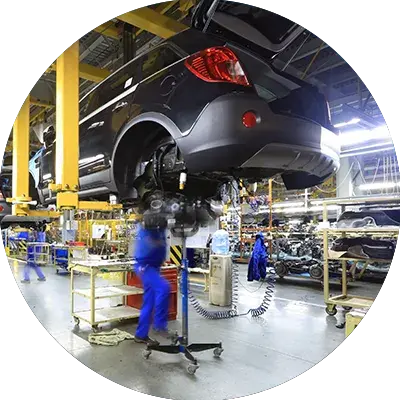
Reliability Requirements in High-Volume Assembly
Assembly tools must operate continuously under demanding duty cycles. Production systems may execute thousands of fastening operations per shift.
For tool manufacturers, reliability requirements include:
- Stable calibration over long operating periods
- High repeatability across millions of cycles
- Resistance to mechanical overload
- Minimal maintenance requirements
HITEC sensors are validated through fatigue testing and calibration processes designed to ensure repeatable measurement performance over extended tool lifetimes.
Safety Critical Fastening
and the Importance of Measurement Integrity
In many industries, the integrity of fastened joints directly affects product safety.
Incorrect torque or clamp load can compromise structural performance in applications ranging from industrial machinery to transportation systems.
Automated assembly tools rely on accurate torque feedback to ensure correct fastening performance. Control systems use sensor output to verify that each fastener reaches its target torque, and that clamp load falls within acceptable limits.
If sensor output becomes inaccurate, the control system may unknowingly approve defective assemblies.
This risk increases in high-volume automated production where thousands of fastening operations occur daily.
To address this challenge, sensor architectures must provide not only accurate measurement but also mechanisms for detecting faults or measurement drift.
TransducerizationIntegrating Sensing into
Assembly Tool Structures
One of the most effective methods of improving sensor reliability and integration is transducerization.
Rather than installing a discrete sensor between mechanical components, transducerization embeds strain gauges directly into the structural elements of the tool.
HITEC works closely with OEM engineering teams to transform mechanical components into calibrated sensing structures.
Benefits include:
- Elimination of mechanical stack ups
- Preservation of structural stiffness
- Reduced tool size and weight
- Improved load path clarity
Finite element analysis is used to identify predictable strain regions within the tool structure while maintaining structural safety factors.
This allows torque and force measurement to be integrated directly into spindles, tool housings and fastening assemblies without compromising mechanical performance.
Custom Sensors Product Spotlight
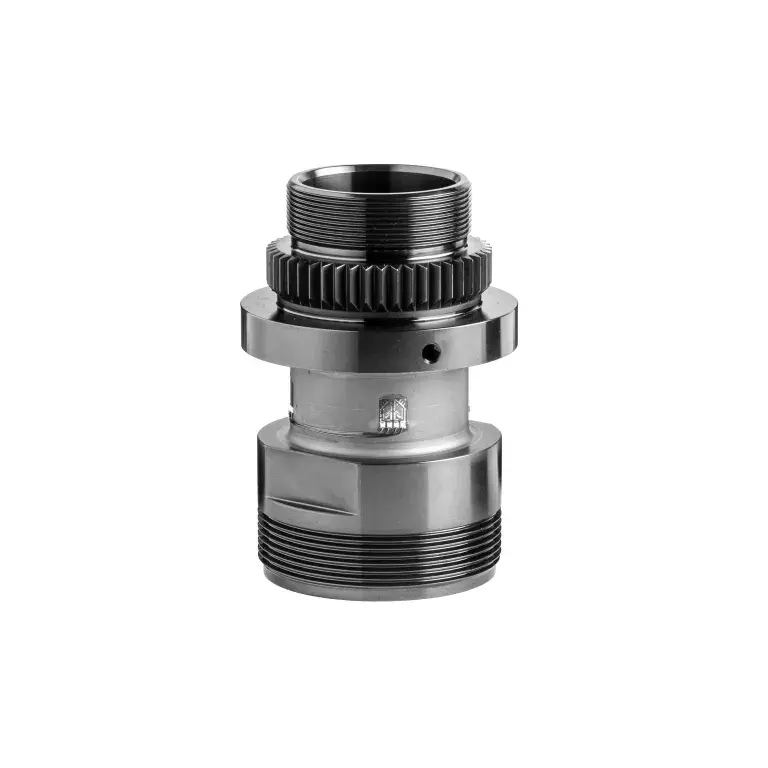
High-torque fastening systems often require measurement in rotating assemblies.
HITEC rotary torque transducers are designed specifically for these applications, enabling accurate torque measurement in dynamic environments.
Key capabilities include:
- High torque capacity for industrial fastening systems
- Stable output under vibration
- Long-term calibration stability
- Wireless telemetry options for rotating systems
Wireless telemetry eliminates cable fatigue risks in rotating tool applications, improving reliability in high duty cycle environments.
Applications include:
- Automated spindle torque verification
- Continuous torque monitoring in production assembly
- Calibration of industrial fastening tools
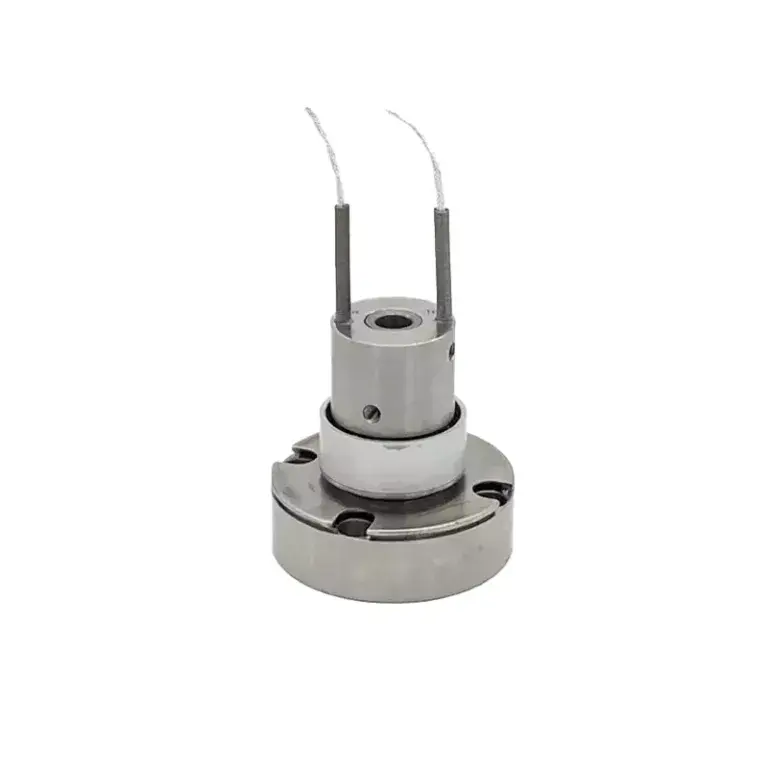
In advanced automated assembly systems, measuring torque alone is not always sufficient.
Multi-axis force sensors measure forces and moments simultaneously across multiple directions. This capability enables more precise control of tool contact forces during automated assembly operations.
Applications include:
- Precision insertion operations
- Robotic assembly processes
- Monitoring off-axis loads during fastening
HITEC multi-axis sensors are designed with compact geometry to integrate within robotic wrists and end effectors without adding excessive mass.
These sensors provide critical data that allows assembly systems to detect misalignment, reduce component damage and improve process repeatability.
Subscribe for Insights
Industry insights, trends, events and unmissable content straight to your inbox
Sign up to our newsletter to get insider access to stay up to date with all things custom strain gauge sensing
Ruggedised Sensor Design for High-Duty Fastening Tools
Assembly tools are exposed to high cyclic loads that can cause fatigue in poorly designed sensors.
HITEC designs sensors using materials and structural geometries optimised for:
- High fatigue resistance
- Long term calibration stability
- Resistance to overload events
Mechanical overload protection strategies protect sensing elements from damage during abnormal tool operation.
Environmental sealing prevents contaminants from degrading sensor performance.
Together, these features ensure that measurement accuracy remains stable even under continuous production duty cycles.
Wireless Sensing for Rotating Tool Applications
Rotating tool assemblies present unique measurement challenges.
Traditional wired sensors can experience cable fatigue and connector wear, particularly in high cycle automated fastening systems.
HITEC wireless telemetry solutions allow torque measurement to be transmitted without physical wiring between rotating and stationary components.
Benefits include:
- Improved reliability in rotating systems
- Reduced maintenance requirements
- Simplified integration with control systems
Wireless torque measurement is particularly valuable in automated assembly spindles where reliability and uptime are critical.
Aerospace-Grade Engineering Applied to Industrial Assembly
Assembly tool manufacturers increasingly face reliability expectations similar to those found in aerospace systems.
Measurement failure can have significant consequences for product safety, regulatory compliance and brand reputation.
HITEC applies engineering principles commonly used in aerospace systems development, including:
- Structured validation and verification processes
- Conservative structural safety factors
- Traceable calibration and documentation
- Redundant sensing architectures
This disciplined approach ensures that sensors perform predictably under defined load and environmental conditions.
Performance Benefits for Assembly Tool Manufacturers
When sensing architecture is engineered correctly, the benefits extend across the entire production lifecycle.
Reliable force and torque measurement enables:
- Consistent clamp load across fastening operations
- Reduced scrap and rework
- Lower warranty exposure due to fastening errors
- Increased production uptime
- Improved product safety and reliability
For manufacturers of industrial assembly tools, accurate sensing is a critical enabler of quality and productivity.
Partnering with HITEC for Assembly Tool Measurement Solutions
HITEC works closely with assembly tool manufacturers to design measurement solutions tailored to specific applications.
From concept development through prototype testing and production deployment, HITEC engineers collaborate with OEM teams to ensure that sensors meet performance, integration and reliability requirements.
Capabilities include:
- Custom sensor design
- Transducerization of structural components
- Multi-channel redundant measurement architectures
- Wireless telemetry integration
- Calibration and lifecycle support
This partnership approach enables assembly tool manufacturers to integrate reliable force and torque measurement into their systems without compromising performance or mechanical design.
Reliable Fastening Starts with Reliable Measurement
As industrial assembly systems increase in torque, speed and automation, reliable force and torque measurement becomes essential.
Measurement accuracy directly influences fastening integrity, product quality and system uptime.
Through compact sensor integration, ruggedised design, redundant measurement architectures and wireless telemetry solutions, HITEC Sensors enables assembly tool manufacturers to build systems capable of delivering reliable fastening performance in harsh production environments.
For OEMs developing the next generation of high-performance assembly tools, reliable measurement architecture is the foundation of long-term system reliability.
HITEC provides the engineering expertise and proven sensing technologies required to make that reliability measurable.